Blog
How to Choose the Right Commercial Freezer for Your Business
How to Choose the Right Commercial Freezer for Your Business
Commercial refrigeration is the heavy-duty cooling equipment that food and drink businesses use to store, display and serve products at safe temperatures. It includes fridges, freezers and display units built to handle constant door openings, hot kitchens and long trading hours. For cafes, restaurants, bakeries, bars and supermarkets, the right commercial refrigeration protects stock, keeps you compliant with food safety rules and helps you sell more.
Commercial refrigeration means any fridge or freezer designed for a business rather than a household. These units are made to run all day, every day, in conditions that would quickly wear out a domestic fridge.
Think about a busy cafe on a Saturday morning. The milk fridge opens dozens of times an hour, the kitchen is hot and staff are loading fresh stock between orders. A commercial unit is designed to recover its temperature quickly after every opening, so food stays cold even when service is flat out.
Commercial units also tend to use stainless steel or other easy-clean finishes, stronger shelving, self-closing doors and more accurate digital controllers. Many are designed to sit in a commercial kitchen, under a countertop or on the shop floor where customers can see your products for sale.
A domestic fridge is built for a family that opens the door a handful of times a day. A commercial fridge is built for a business that opens it constantly, often in a much warmer room.
The biggest difference is cooling power. Commercial compressors and fans pull the temperature back down quickly after the doors are opened, so products stay cold throughout service. The build is tougher too, with heavy-duty shelving, hinges and finishes made for constant use and regular cleaning.
Commercial units also give you more control and flexibility. Digital controllers make it easy to set and check the exact temperature, while different glass door designs and bench-heights suit various display and service configurations. Larger internal volumes and adjustable shelving fit trays, crates, containers and bulk stock of all shapes and sizes.
Using a home fridge in a commercial setting can mean warm product, food waste and a unit that fails early. It may also make it harder to show a food safety officer that your cold food is being held at the right temperature.
Temperature control matters because bacteria in food grow fastest between 5°C and 60°C, which is often called the temperature danger zone. Australian food safety standards require potentially hazardous food to be kept at 5°C or below when it is stored cold, and frozen food to stay frozen.
That is why commercial refrigeration is one of the most important investments a food business makes. A commercial fridge that cannot hold temperature during a busy lunch rush puts your stock, your customers and your reputation at risk.
Good commercial units help you stay on top of this with accurate thermostats, easy-to-read displays and consistent airflow. Pair the right equipment with regular temperature checks and a simple log, and you have a strong foundation for food safety.
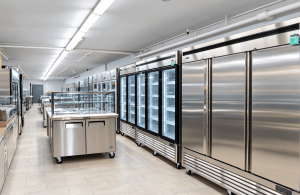
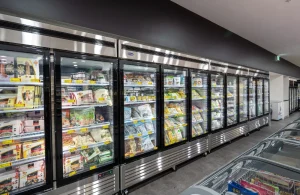
Most businesses use a mix of units, each doing a different job. Our range of commercial fridges covers storage, prep and display, while our commercial freezers handle long-term frozen storage of meats, seafood, packaged food and ice cream.
The most common types are:
The right unit depends on how your business works day to day. Start with what you store and where, then narrow down from there.
Ask yourself these questions before you buy:
For tight kitchens, an under bench fridge is often the smartest use of space. It turns a prep bench into cold storage and cuts down on trips to the main fridge during service.
Running costs depend on the size of the unit, how often it is opened, the room’s temperature and ventilation, and how well it is looked after. Choosing a unit that matches your real needs is the simplest way to avoid paying to cool unused empty space.
Simple maintenance goes a long way. Keep condenser coils clean and free of dust and grease, as a clogged condenser makes the compressor work harder. Check door seals regularly and replace any that are torn or no longer close firmly. Leave room around the compressor unit for airflow, avoid overloading shelves and keep an eye on temperature readings so you catch problems early.
A well-maintained fridge runs more efficiently, lasts longer and is far less likely to break down in the middle of a busy shift.
Since 2004, Wellkart has supplied commercial fridges and freezers to Australian food and hospitality businesses. We sell direct, without the middlemen, and share the savings with you.
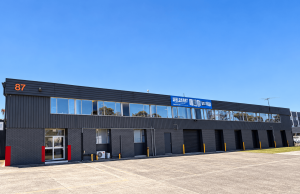
Our range covers storage, prep and display fridges, chest and upright freezers, and supermarket refrigeration, so you can fit out a whole venue from one place. We deliver Australia-wide from our massive Sydney warehouse with genuine stock availability. You are also welcome to see our extensive range in person at our showroom in Sydney.
Commercial refrigeration is more than a bigger fridge. It is the equipment that keeps your food safe, your stock fresh and your service moving when it matters most. Understanding the main types, the 5°C rule and the questions to ask before you buy will help you choose units that suit your menu, your space and your budget.
Get it right and your refrigeration quietly does its job for years. Get it wrong and you risk spoiled stock, failed checks and costly downtime.
Whether you are opening a new cafe, upgrading a busy kitchen or fitting out a retail floor, our team can help you choose the right equipment for the job. Contact us or call 1300 918 868 to talk through your needs, or shop the range online today.
How to Choose the Right Commercial Freezer for Your Business
What Is Commercial Refrigeration? A Guide for Australian Businesses Table
Commercial Fridge vs Domestic Fridge: What Is the Difference? Table